Design
Model Village
Where
Nakivale, Uganda
Impact Numbers
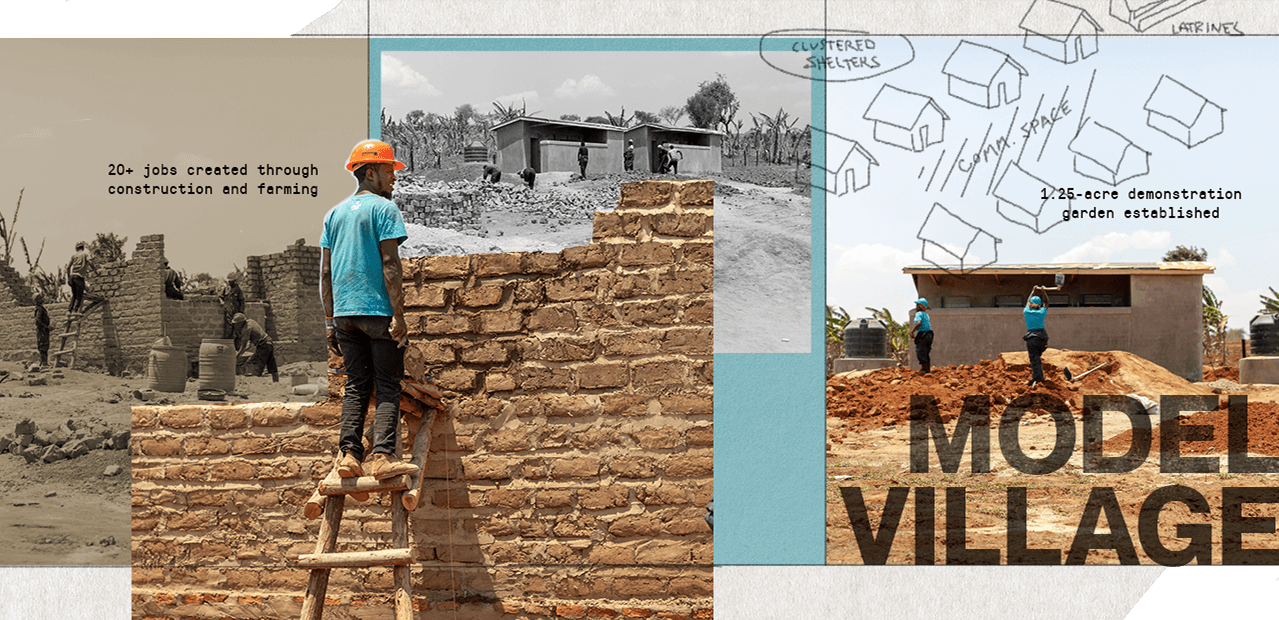
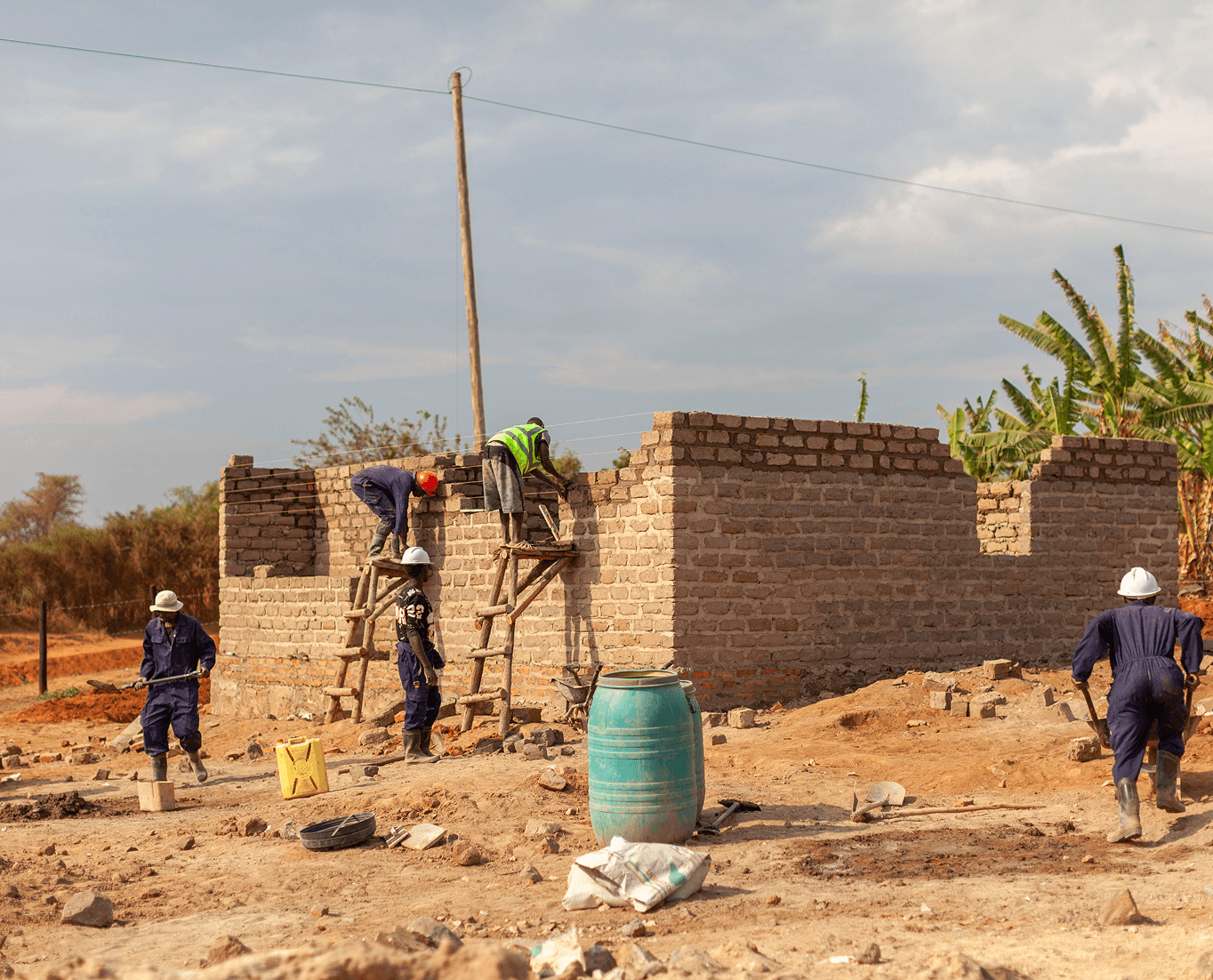
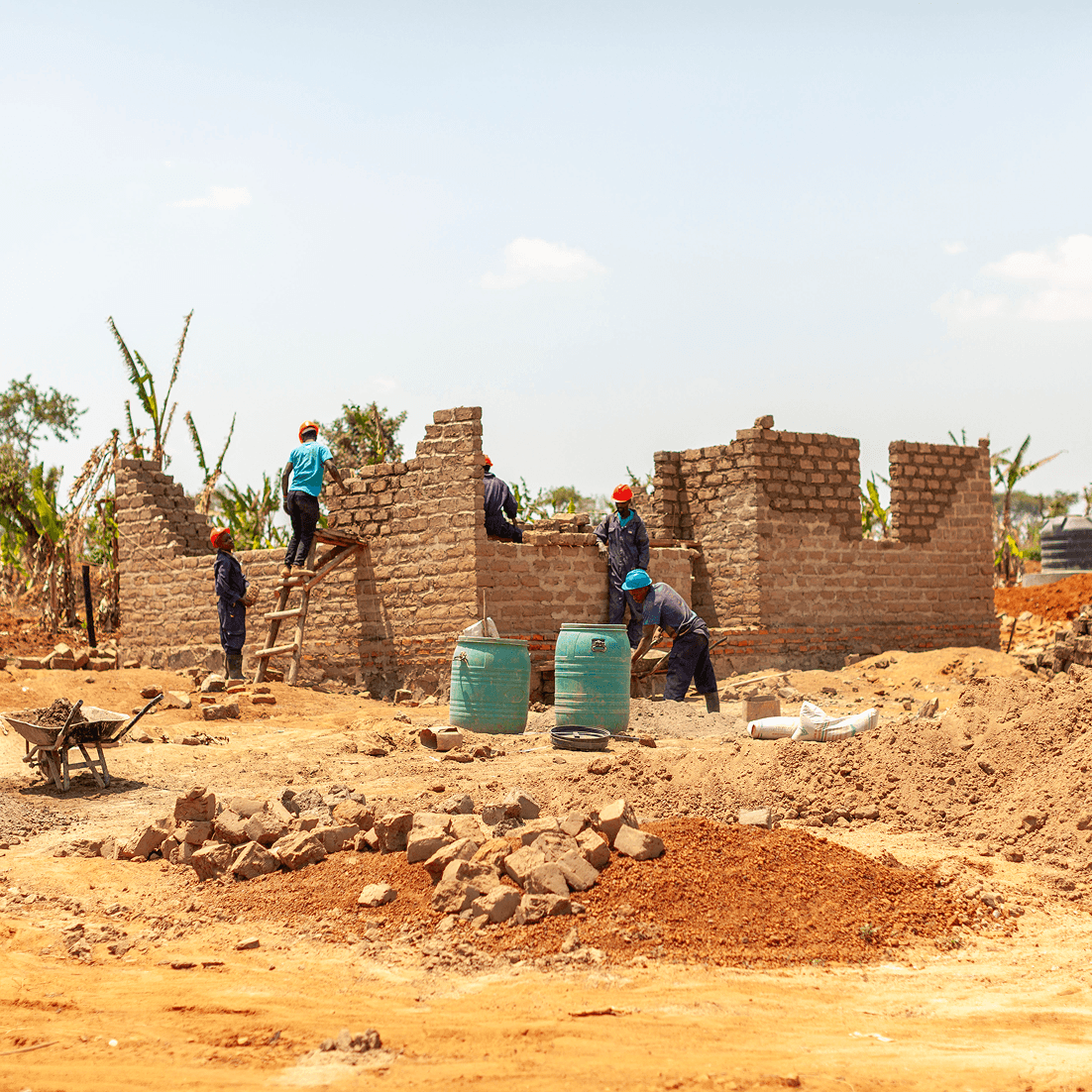
4 duplex units built (2 completed, 2 under construction)
300+ trees planted
1.25-acre demonstration garden established
20+ jobs created through construction and farming
Published on
Summary
Model Village is a proof of concept for high-density, village-style refugee housing that replaces individual plots with duplex clusters, shared walls, communal gardens, and water infrastructure. The design dramatically reduces per-unit construction costs while freeing up land for agriculture. The first four duplexes were completed in 2025.
THE CHALLENGE
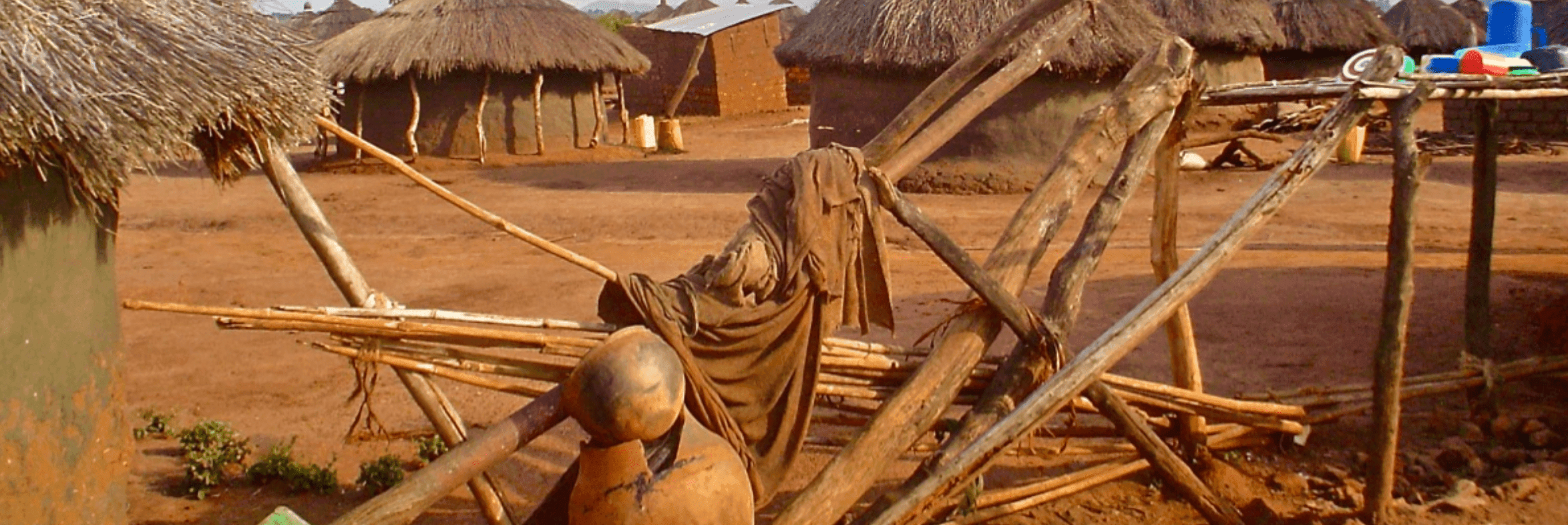
Rapid increases in refugee arrivals in Nakivale have placed significant pressure on land availability, one of the settlement’s most critical resources. Historically, newly arrived families were allocated 50m x 50m plots, but as land has become scarcer, the allocation has decreased to 30m x 50m, then to as little as 10m x 20m.
While smaller plots allow more families to be accommodated, they limit refugee's ability to engage in subsistence farming, reducing food production and increasing reliance on external assistance. As land sizes continue to shrink, achieving self-reliance through agriculture becomes increasingly difficult.
This challenge calls for a more strategic and efficient approach to land management, one that accommodates more people while strengthening food security and livelihoods.
THE OPPORTUNITY
Model Village responds not only to land scarcity, but also to the need for stronger social and spatial organization within the settlement.
By consolidating currently fragmented agricultural plots and rethinking how housing is arranged, the program creates opportunities to:
Increase agricultural production through larger, contiguous farming areas
Improve efficiency and yields through shared land management
Free up space for communal areas such as gardens, sports fields, and gathering spaces
Strengthen social cohesion and everyday interaction
In parallel, transitioning from detached shelters to multi-family housing units within a village setting reduces construction costs through shared walls, foundations, and roofing. These savings can be reinvested in higher-quality, more durable materials, resulting in safer, more dignified homes that require fewer repairs over time.
support every shelter
Every Donation will impact our ability to fund day one shelter and train refugees to build and maintain their homes.
Failed to load.
Please refresh the page.
WHAT IS THE MODEL VILLAGE?
Model Village is a high-density, village-style housing model that clusters families into compact residential areas while preserving and expanding land for agriculture.
Instead of allocating land plot by plot, housing is arranged in village clusters. This approach dramatically reduces the land footprint required for housing and unlocks significant areas for consolidated agricultural use.
Under the current model, 10 families living on individual 30m x 50m plots occupy 15,000 sq.m. of land, leaving about 11,000 sq.m. for agriculture, water infrastructure, and other communal structures.
HOW IT WORKS
The Model Village approach is grounded in spatial analysis, participatory design, and phased implementation.
Land analysis & planning
Drone imagery and land-use mapping are used to understand existing plot boundaries, housing footprints, and agricultural patterns. This analysis informs the design of compact village layouts that maximize efficiency while respecting movement, access, and shared spaces.
Participatory design
Future residents are engaged through focus group discussions and participatory design workshops. These sessions introduce the collective living model, gather concerns and preferences, and directly shape housing layouts, communal spaces, and agricultural zones.
Village design & construction
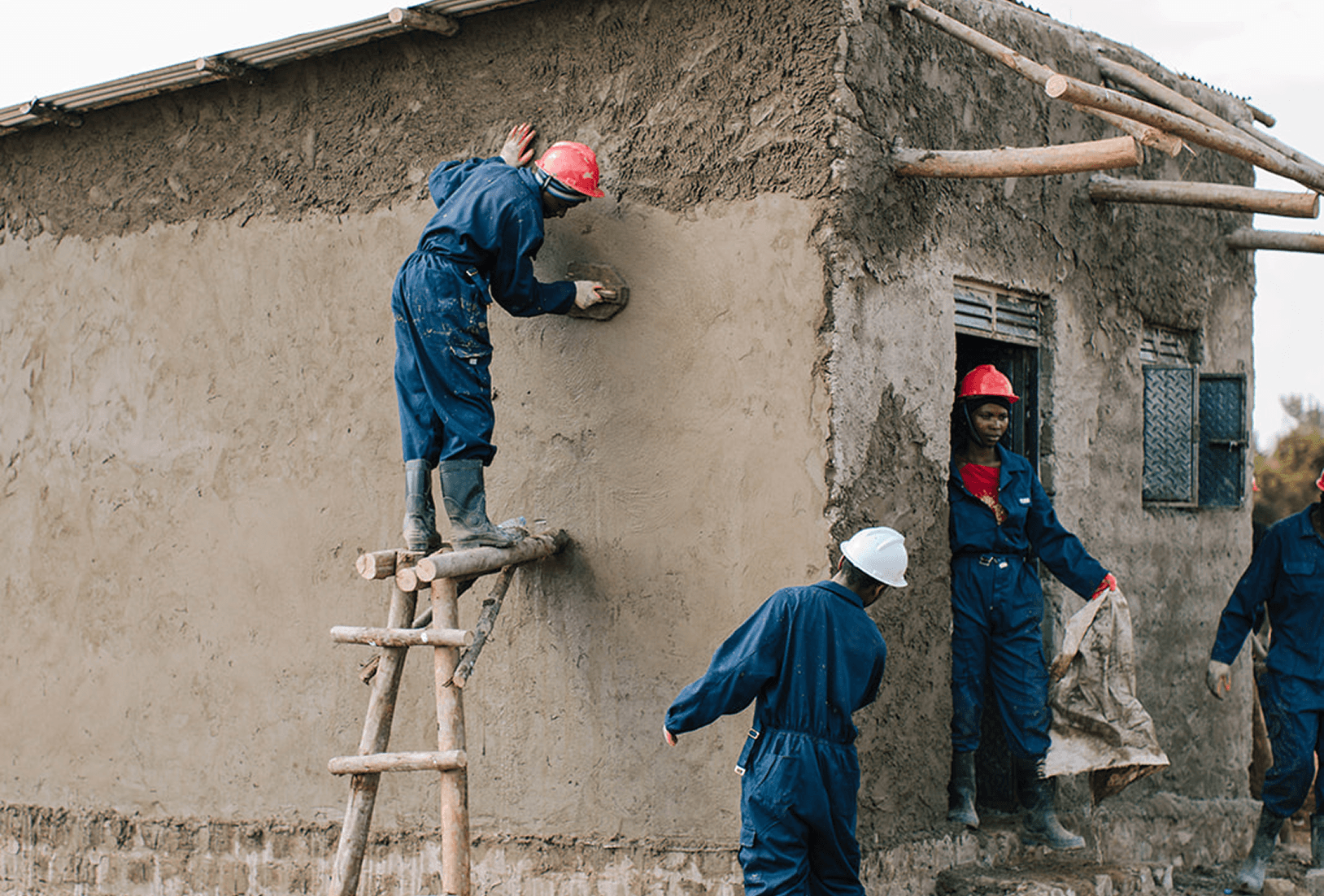
Based on community input, detailed architectural and site plans are developed for multi-family housing units, shared infrastructure, and communal areas. Construction prioritizes durability, cost-efficiency, and adaptability to local conditions.
BEYOND HOUSING: FOOD SECURITY & COMMUNITY LIFE
Model Village is not only about housing density—it is about how land supports daily life.
By consolidating agricultural land, households gain access to larger, contiguous farming areas that support:
Higher crop yields
Improved food security
Increased income from surplus production
At the same time, dedicated communal spaces foster interaction, recreation, and shared responsibility, strengthening social ties and improving overall well-being.
Read More every shelter stories
Emergency Floor Lebanon
Rohingya Response: Privacy and Protection
Prioritizing Refugee Success is the Key to Rebuilding in Post-Conflict Settings
What Difference Can a Floor Make?
Rohingya Response Part 2
Bringing Warmth: How a Floor Can Change a Home
Refugees and Displaced People: The Numbers
What is "Adequate Shelter?"
Co-Creation Methodologies: Redefining Development
Summer 2019 Co-Creation Internship